Your dog has been trying to talk to you since the day you met. Not in words, but in a steady stream of tail flicks, ear shifts, glances, and weight changes that most of us walk right past. Once you learn to notice them, an ordinary evening on the couch turns into a conversation — and a dog who feels understood is a dog who trusts you.
I learned this the slow way with my first rescue, a wary shepherd mix who flinched at sudden hands. I kept reading her as "difficult" until I started reading her signals instead. Everything changed. Here is how to start seeing what your dog has been saying all along.
Read the whole dog, not one part#
The single biggest mistake people make is fixating on one body part. A tail tells you something, but it only makes sense alongside the ears, the eyes, the mouth, and the way weight sits in the body.
Think of it like tone of voice. The same word can be warm or sharp depending on everything around it. A dog leaning forward with a high stiff tail and a closed mouth is telling you something very different from a dog leaning forward with a loose wiggly body and an open, soft mouth — even though both are "moving toward" something.
So before you interpret any single cue, pause and take in the whole picture. Loose and curvy usually means comfortable. Stiff and still usually means a dog is gathering information and deciding what to do next.
What the tail actually says#
The tail is the most misread part of the dog. "Wagging means happy" is the myth that gets people bitten. A wag means arousal — emotional activation — and that can be joy, but it can also be tension or conflict.
Pay attention to three things:
- Height. A tail held high and stiff signals confidence or alertness, sometimes a warning. A tail at a neutral, relaxed middle height is a calm dog. A tucked tail means fear or stress.
- Speed and size. A broad, loose, whole-body wag is friendly. A fast, tight, twitchy wag on a stiff body is high arousal and not an invitation to approach.
- Direction. Researchers have noticed dogs tend to wag slightly more to their right when they feel positive and to their left when uneasy. You will not measure this in real time, but it is a good reminder that a wag is not a simple yes.
Ears, eyes, and mouth#
The face carries fast, honest information.
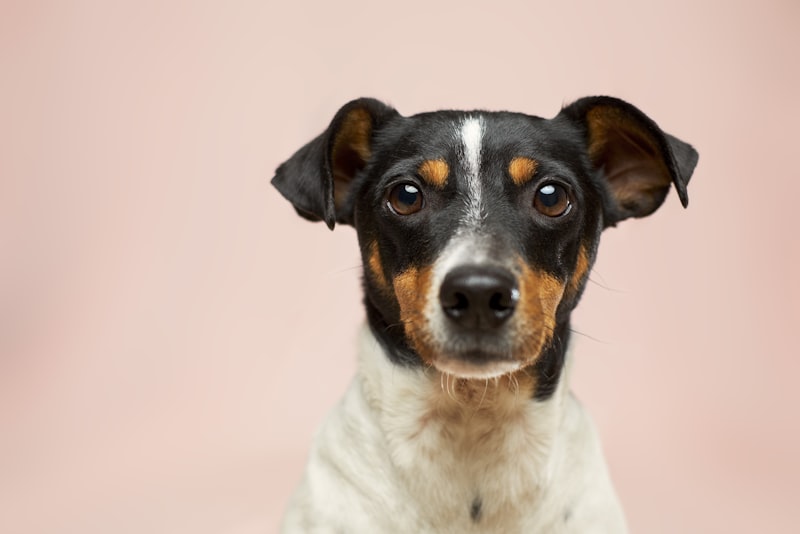
Ears pull forward when a dog is interested or alert, and pin back or flatten when they are anxious, appeasing, or afraid. Floppy-eared breeds make this harder to read, so watch the base of the ear where it meets the head.
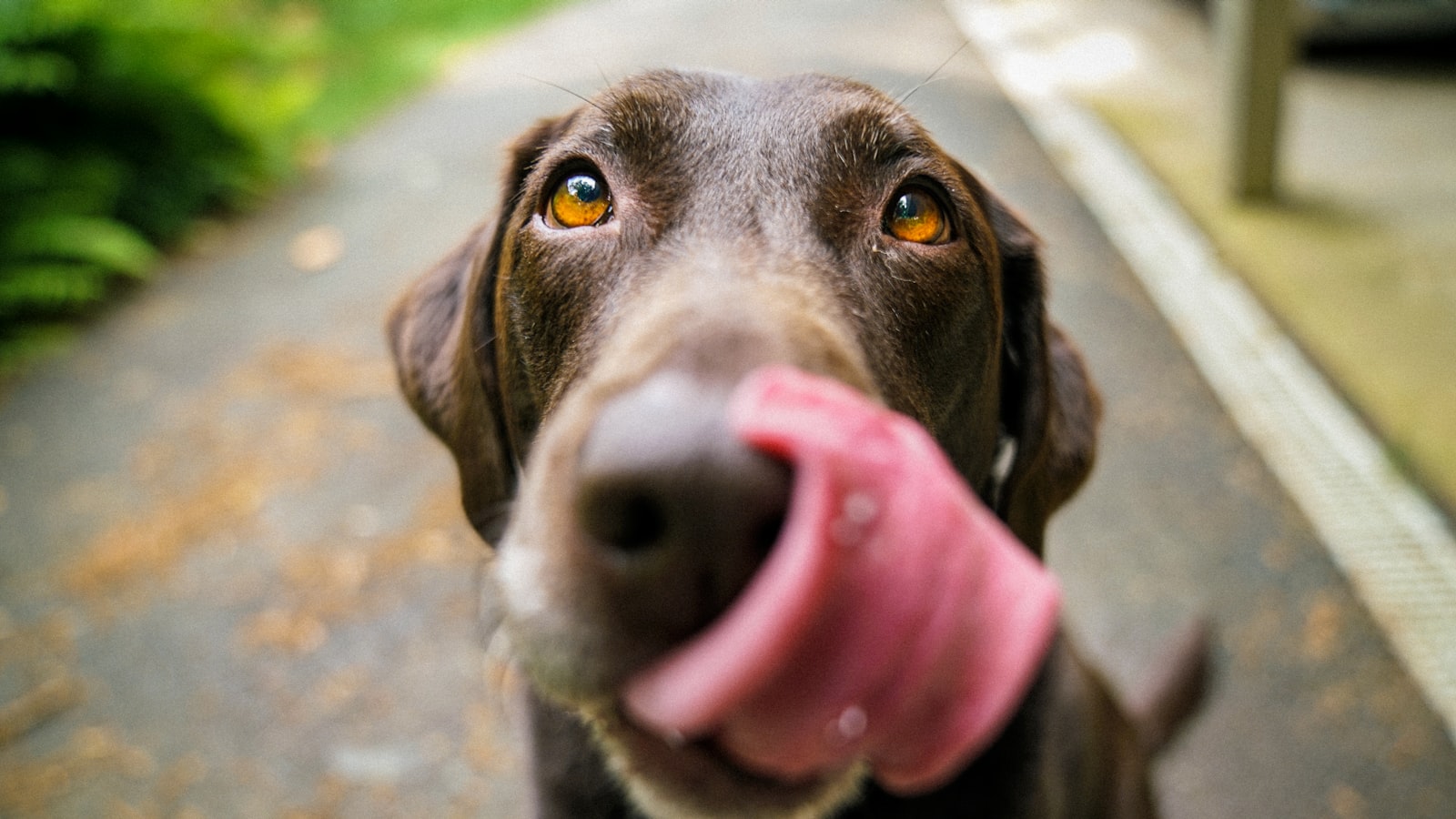
Eyes soften and blink when a dog is relaxed. When you see "whale eye" — the whites showing in a crescent as the dog turns its head away but keeps you in view — that is a clear request for space. A hard, unblinking stare is the opposite of relaxed.
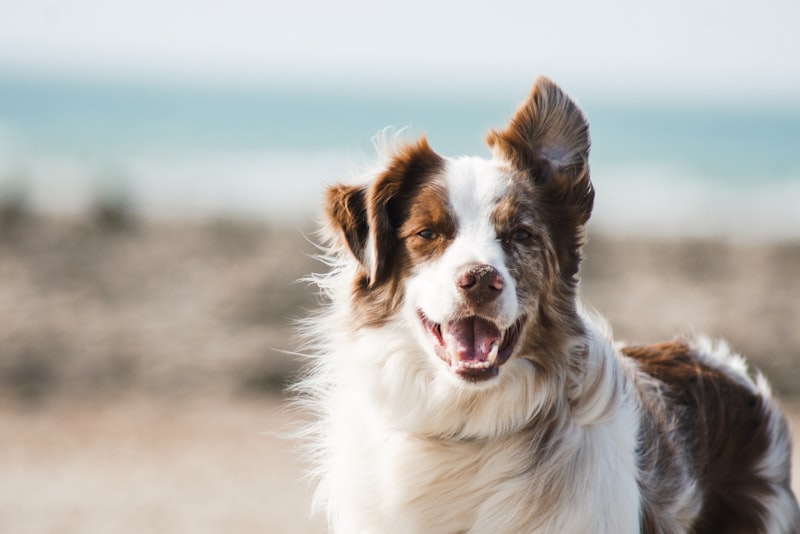
The mouth tells you a lot too. A slightly open mouth with a loose "smile" and easy panting is a comfortable dog. A tightly closed mouth, especially one that closes suddenly, often means the dog just shifted from relaxed to watchful. Yawning when nobody is tired, and quick lip or nose licks, are stress signals worth noticing.
Calming signals: your dog asking for a break#
Dogs are deeply peace-seeking animals. To avoid conflict, they offer what trainers call calming signals: a yawn, a slow blink, a head turn, a lip lick, sniffing the ground, moving in a curve rather than straight on, or simply turning sideways.
We tend to read these as the dog ignoring us or being stubborn. In reality, the dog is being polite — defusing a situation that feels like too much. A puppy who turns away and sniffs the grass when a stranger barrels toward them is not being rude. They are saying, gently, "this is a lot, please slow down."
When your dog offers a calming signal, the kindest thing you can do is honor it — ease off, add space, and let them choose to re-engage. That single habit builds more trust than any treat.
When you respond to these requests, your dog learns that you listen. That is the foundation of a relationship where they look to you instead of handling stress alone.
The "guilty look" is not guilt#
Here is the myth I most want to retire. You come home, something is chewed or knocked over, and your dog gives you those pleading eyes, flattened ears, and a low slinking posture. It looks like a confession.
It is not. What you are seeing is appeasement behavior — a response to your body language and tone, not memory of a past act. Studies have shown dogs produce the same "guilty" display whether or not they actually did the thing, as long as the human acts displeased. Your dog is reading your stiff shoulders and sharp voice and trying to calm you down.
This matters because scolding a dog for that look teaches them that your arrival is unpredictable and tense, not that the chewing was wrong. The behavior you want to change is better solved with management and force-free training, never punishment after the fact. If you missed the moment, you missed the moment — clean up, breathe, and set things up so it is harder to happen next time.
Why learning this builds trust#
Reading body language is not a party trick. It is how you become safe and predictable to your dog — the human who notices when they are uncomfortable and does something about it.
Start small. For one week, narrate your dog to yourself: loose body, soft eyes, happy. Tail high and stiff, mouth closed — let me give them room. You will be clumsy at first, then suddenly fluent. And your dog will feel the difference long before you can put it into words.
This is general guidance, not a substitute for professional help. If your dog shows sudden changes in behavior, persistent fear, or any signs of aggression, talk to your veterinarian or a certified, force-free behavior professional. Reading the signals is the first step. Acting on them with patience is the whole point.